Home › Guides › Sauna Ventilation: Where the Vents Go and Why
Sauna Ventilation: Where the Vents Go and Why
Good ventilation is what makes a sauna feel alive instead of stuffy. It is almost entirely about vent placement, not fans.
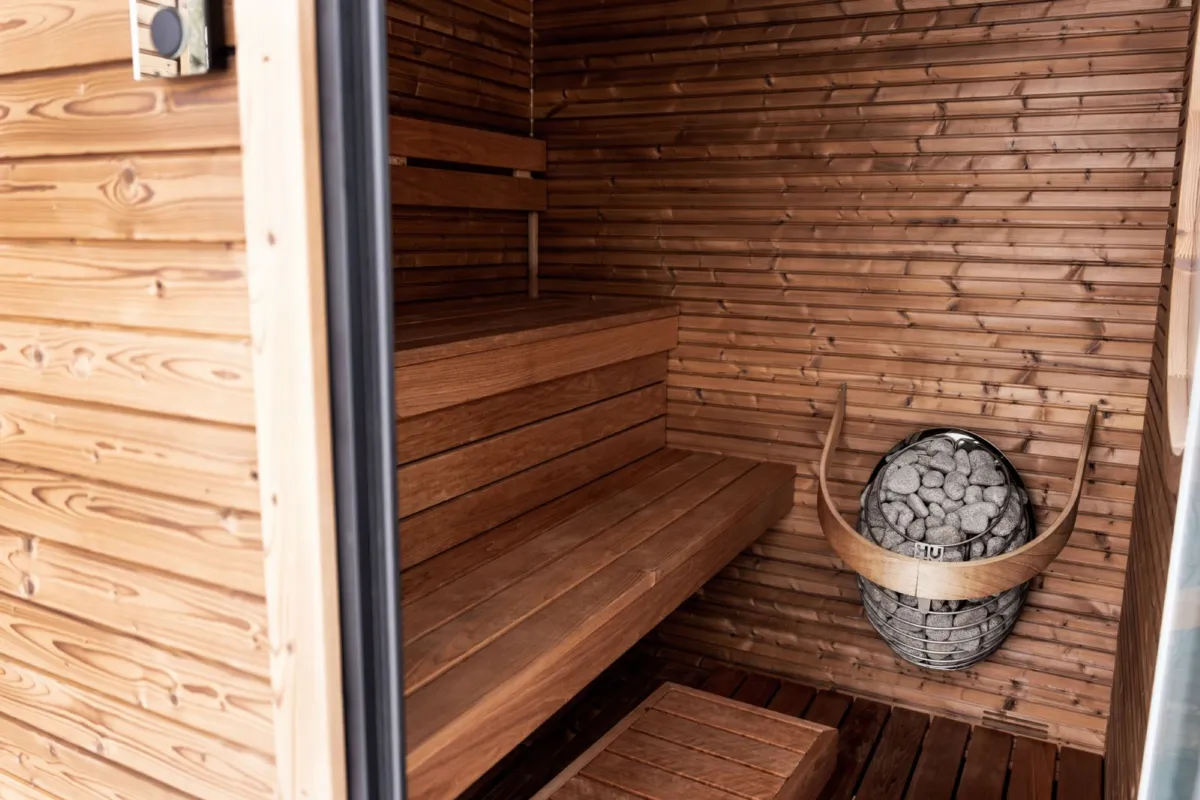
A traditional sauna breathes by convection. Fresh air comes in low near the heater, gets heated, rises and circulates, then leaves through an outlet low on the opposite wall. That low-to-low path pulls warm air across the whole room and keeps oxygen up and CO2 down at head height.
The two vents
Intake: low, next to or underneath the heater, so incoming air is warmed immediately. Roughly 4×4 inches for a home room.
Exhaust: on the wall opposite the heater, also low, near the floor or under the lower bench, sized a little larger than the intake and made adjustable so you can tune the pull. Ducting it up and out through the ceiling cavity works too, as long as the opening itself is low.
The common mistake is putting the exhaust high, up near the ceiling. That vents your hottest air straight out and short-circuits the loop, so the lower half of the room stays cool and the top roasts. Keep the outlet low and let convection do the work.
Mechanical help
Passive vents are enough for most rooms. A quiet inline exhaust fan on the outlet helps a windowless indoor build or a large room clear humidity faster after a session, but it is a refinement, not a requirement.
Ventilation and heater size interact: a leaky, over-ventilated room bleeds heat and needs more kW. Our heater-size calculator assumes a properly sealed, vented room.
FAQ
Where should the sauna exhaust vent go?
Low on the wall opposite the heater, near the floor or under the lower bench, not up by the ceiling. A high outlet vents your hottest air and stalls circulation.
Do I need a fan in my sauna?
Usually no. Low-intake, low-exhaust passive vents drive convection on their own. A small exhaust fan only helps clear humidity faster in a sealed indoor room.